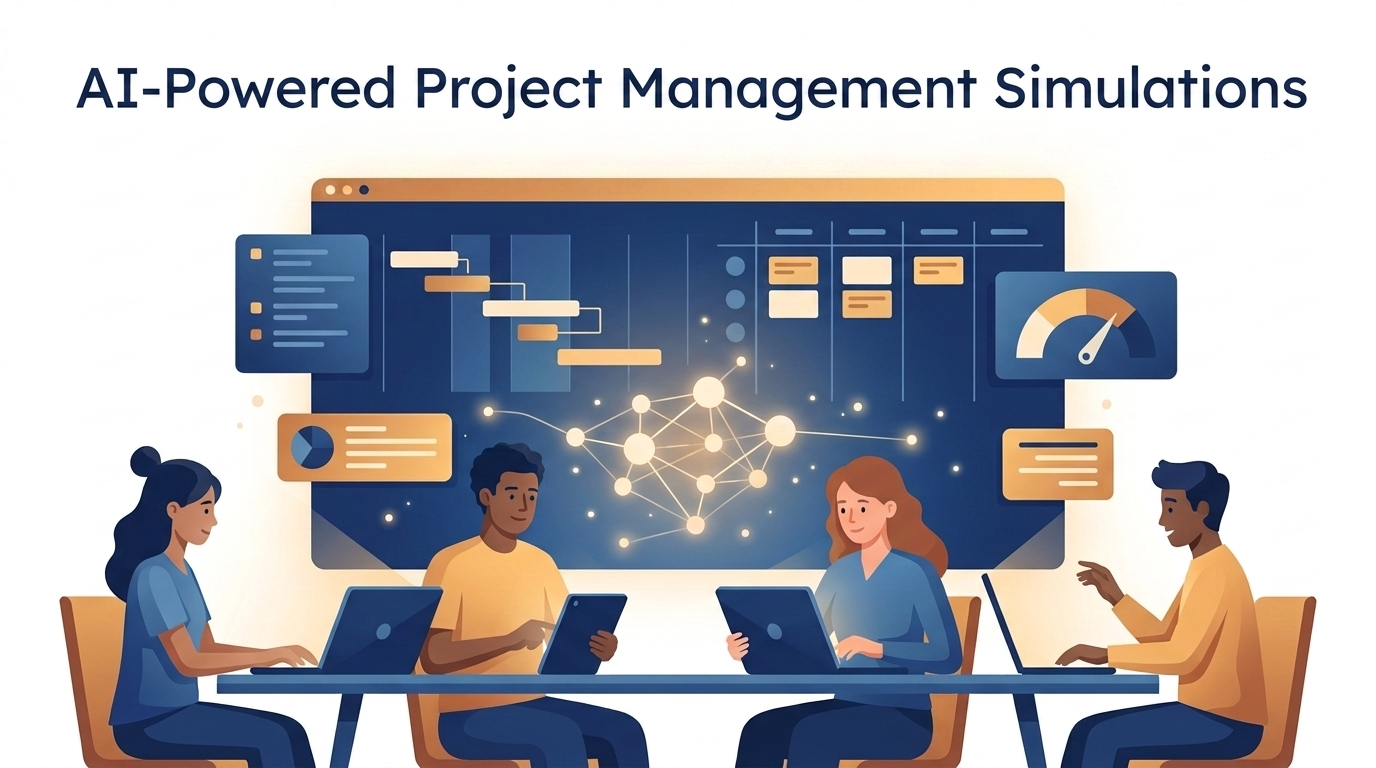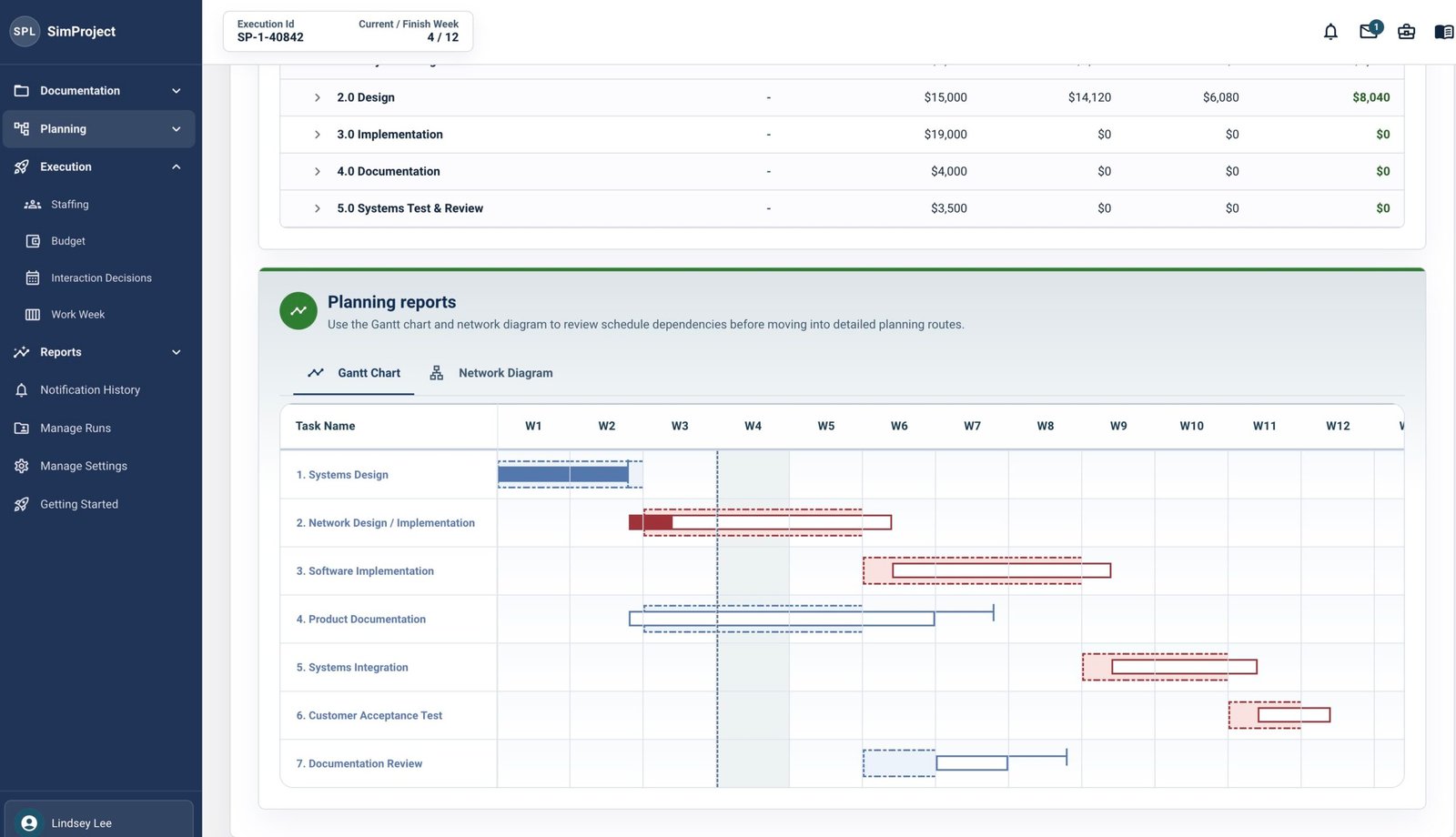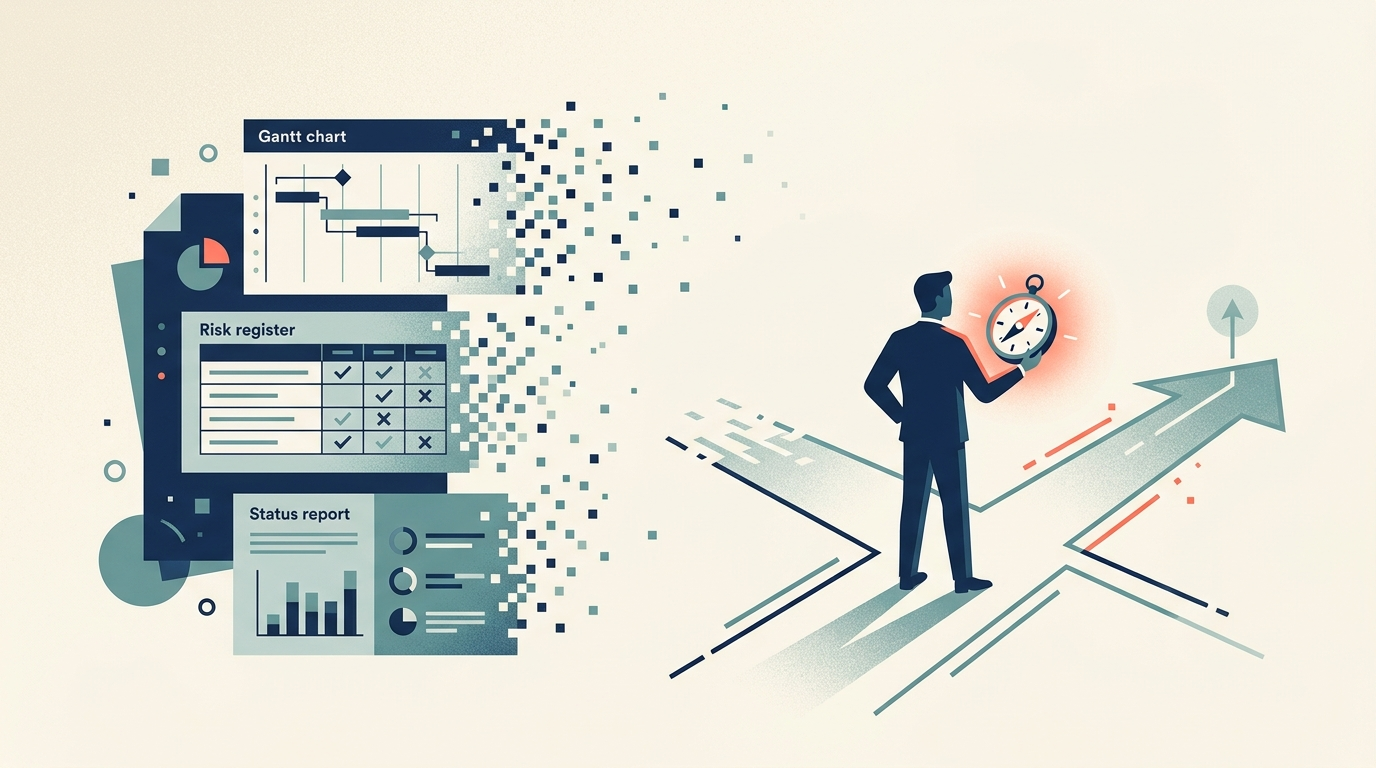


End-to-End Construction Project Lifecycle
Learners manage the full lifecycle—from kickoff and planning through execution, monitoring, punch list, and closeout.

Real Construction Tradeoffs, Real Consequences
Balance schedule, cost, quality, safety with constraints like labor availability, material lead times, inspections, and weather impacts.

Simplified Grading / Performance Tracking
Auto-scored outcomes plus dashboards for individual and team performance—less manual review, more coaching.
Cloud-Hosted and Easy to Launch
No installation. Launch in-person, hybrid, or online with guided onboarding. Fast and easy student set up and tech support.
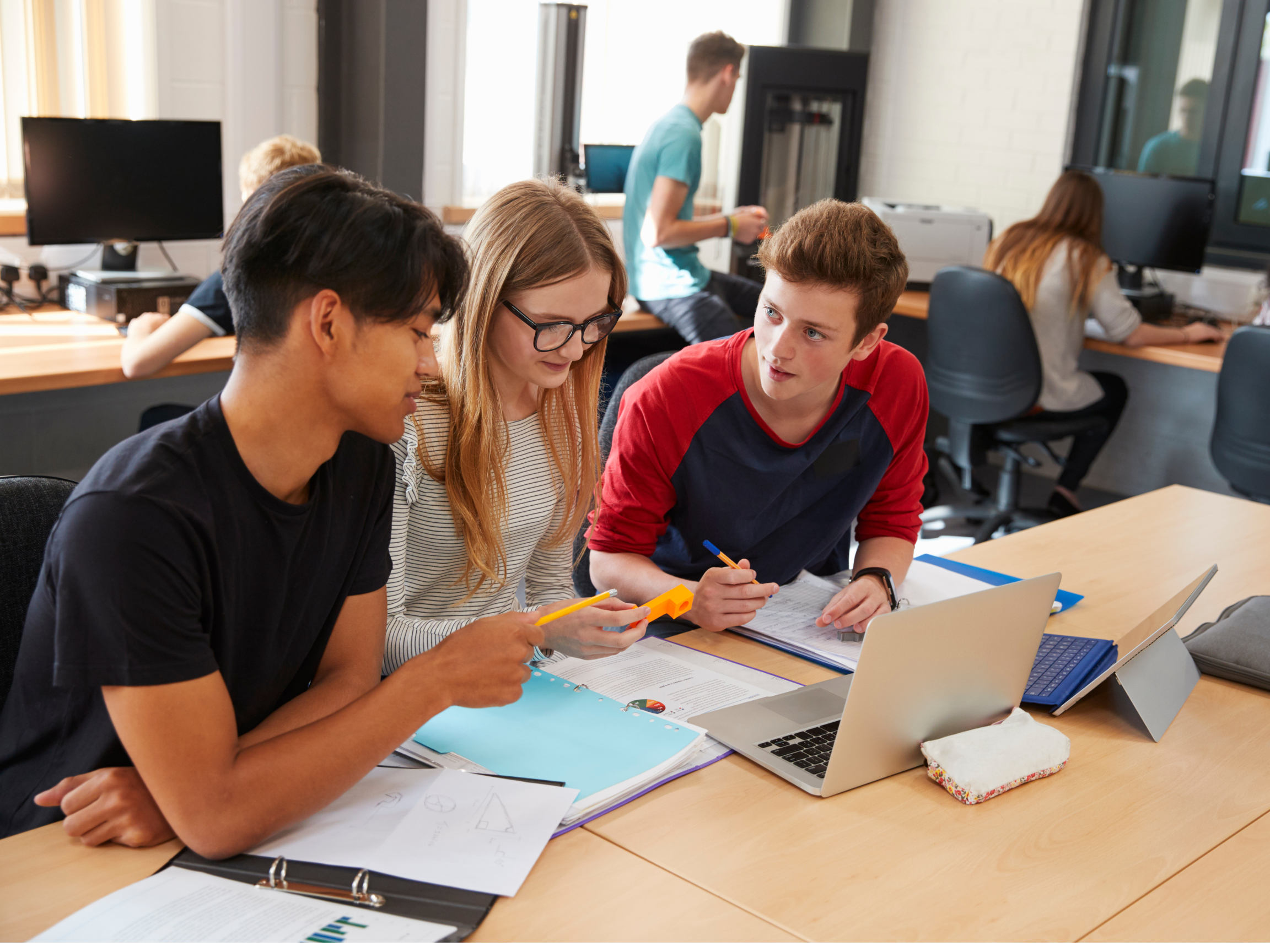

The results determined this simulation improved the learning of project management concepts and added value to the course for most of the students. By drilling down deeper into specific knowledge areas, it was possible to establish a positive relationship between simulation and learning outcomes for distance students, thus addressing the challenge project management instructors face in moving content into an on-line format.
April Reed, PhD, PMP, CSM
Associate Professor, College of Business - MIS Department East Carolina UniversityThe quality that SPL has been providing us is greatly appreciated; we see this reflected in the enthusiasm expressed by the participants in the Project Management Simulation. I see this as a strong foundation for our curriculum moving forward.
Course Participant
3MThe simulation learning process was a much better process then straight lecture. The sense of accomplishment is greater when what is being learned is instantly being applied.
Participant
Pete's CofeeWe are LOVING this Simulation! It has really elevated our course!
Ms. Thea Hempel, MBA
Course Guardian: Project Management and Global Business Chippewa Valley Technical College
I have never been so engaged in training as I was in the simulation. That along with the presenter made this training hands down the best I have ever attended.
Participant
Minnesota Management and BudgetThe simulation was engrossing and a great way to drive home the lessons – I learned a lot about teamwork from this experience.